

Proyecto "Master Plan de parcelamiento para Emprendimiento vitivinícola Pagos de Canota" 3.000 ha de viñedos y diseño paisajístico
Valle de Canota, Mendoza. Junio 2.008.
(Co-proyectista: Ing. Emilio Marchevsky)
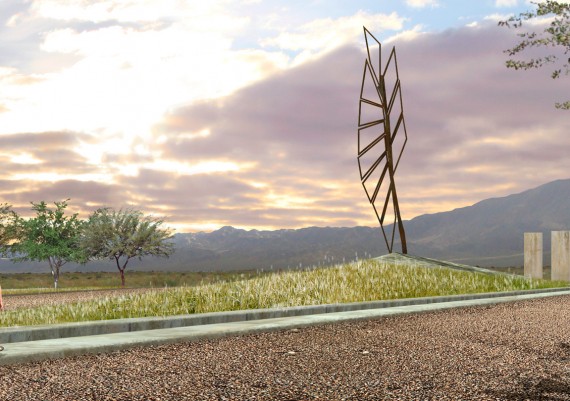
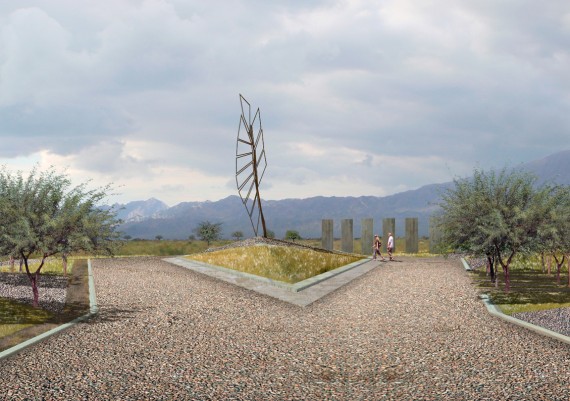
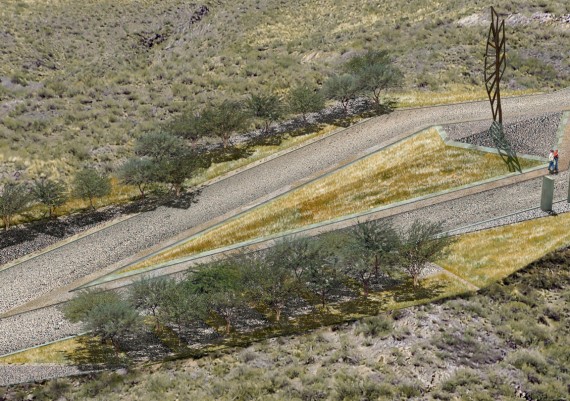
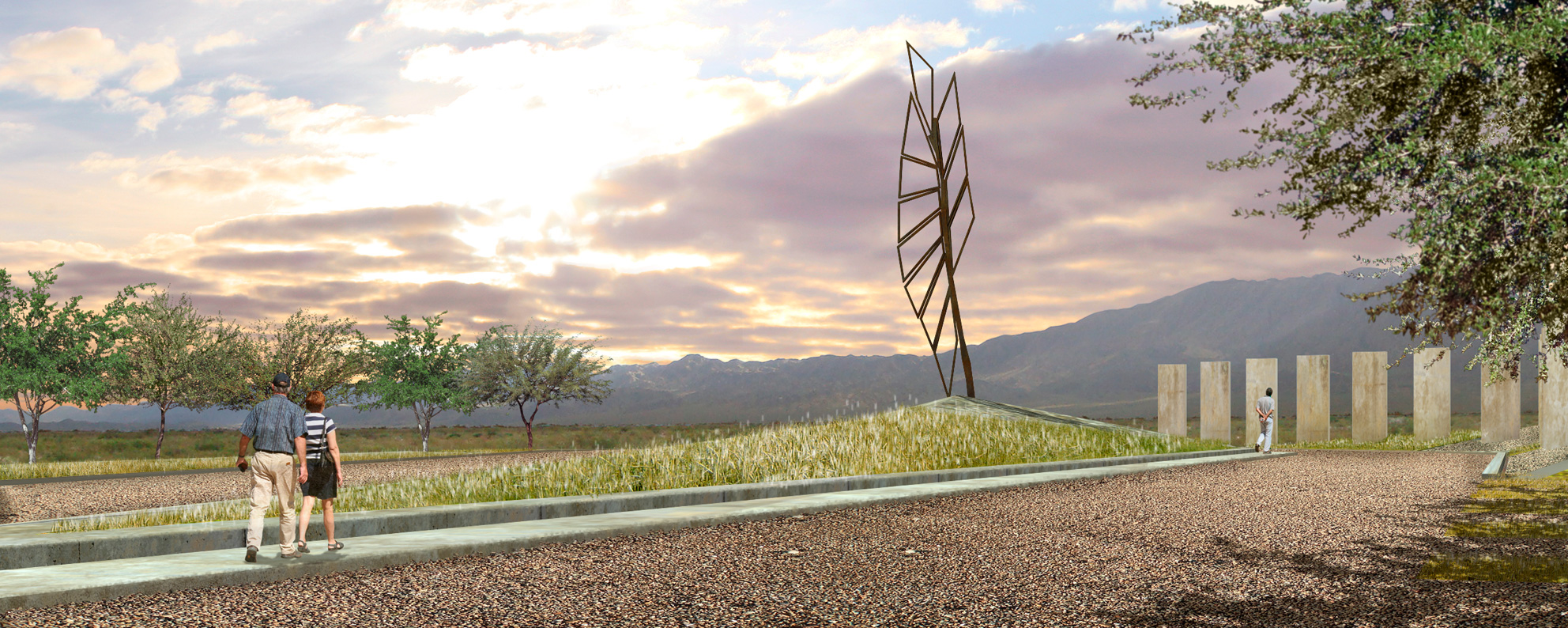
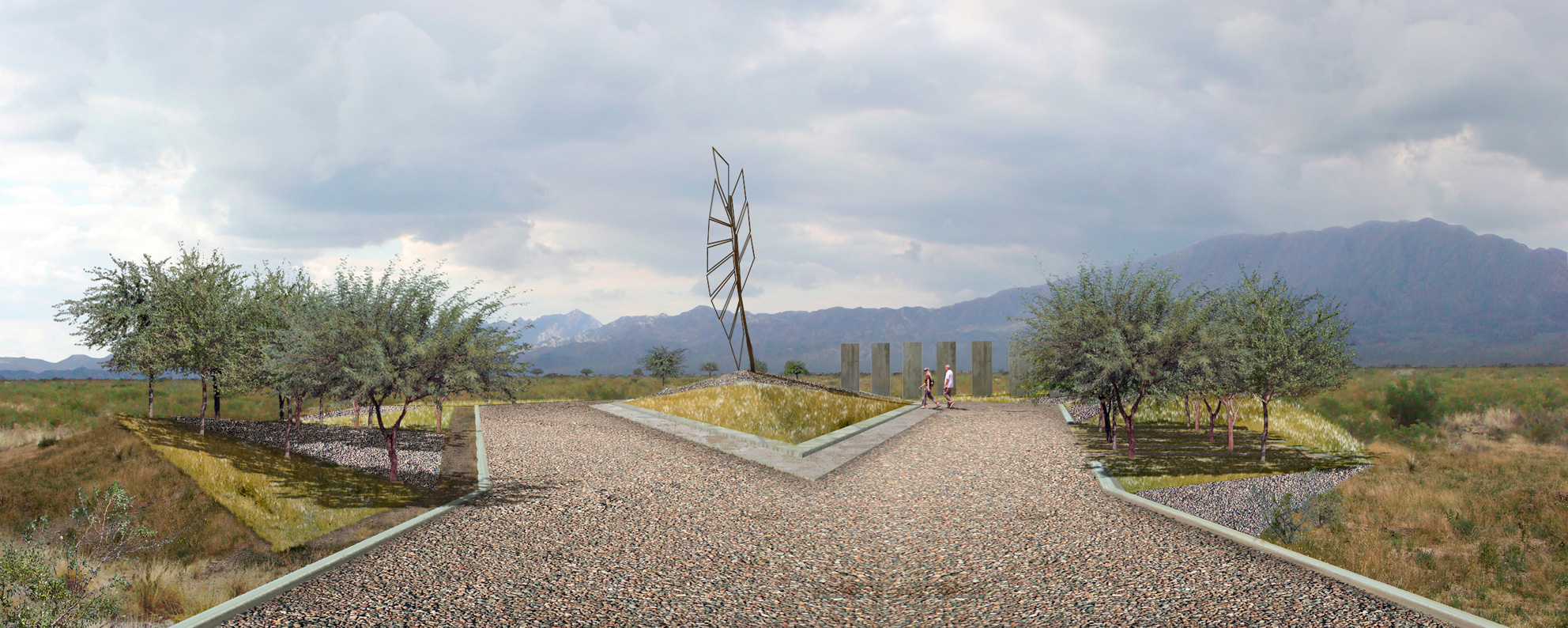
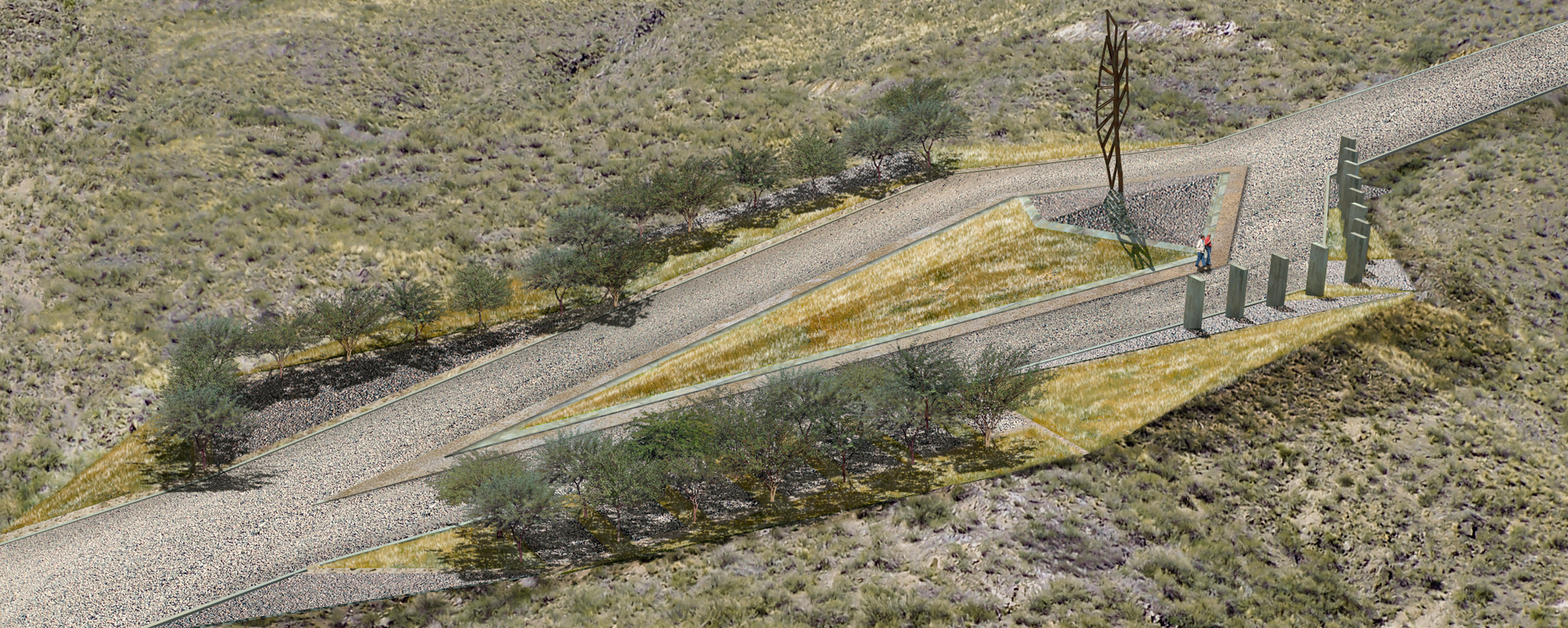
Las geometrías propias de las culturas precolombinas inspiran este ambicioso proyecto de 3.000 hectáreas en un Área Natural Protegida (debido a su diversidad biológica y su valor histórico y arqueológico), donde no se reproducen literalmente las formas, sino que se adaptan a la forma del terreno, sus drenajes y sus límites. El Valle de Canota, que además alberga una gran reserva de agua mineral natural, sugiere un diseño final que se adapta plenamente al terreno, surgiendo la forma de los cauces fluviales y mimetizándose con los cerros.
El terreno fue originalmente fraccionado en doce parcelas de 270 hectáreas, y el lugar destinado a la construcción de una villa turística fue emplazado en uno de los extremos del predio. Se levantarán cuatro estaciones a lo largo del recorrido, concebidas para la contemplación del entorno, además de puentes a uno y otro lado del camino para permitir el paso a las personas y a los animales autóctonos.
Master Plan: plot division for Pagos de Canota wine venture
(Co-Project: Ing. Emilio Marchevsky)
Pre-Columbian geometries inspired this ambitious 3,000-hectare project in a natural area, which is protected due to its biodiversity and its historical and archaeological value. Forms are not reproduced verbatim, but adapted to the shape of the land, its drains and its limits. The Canota valley, which also houses a large natural mineral water reservoir, suggests a final design that is fully down to the ground, evoking river channel shapes and mimicking the hills.
The land was originally split into twelve plots of 270 hectares each; and the place for the construction of a tourist village was located at one end of the property. Four stations designed for landscape contemplation will be built along the route, as well as bridges from side to side of the road to allow passage for people and native animals.